

I love researching things as I put together these blog posts, but sometimes I get lost in a web of tangents. Everything I read seems to lead to some other fascinating thing and before I know it, I’ve lost sight of the actual thing I was trying to write a blog post about in the first place. Usually, I don’t share these tangential wanderings, but the one that occurred this week led me full circle back to the Isle of Man, via 15th century ornithologists, the Americas, the language of the Aztecs and the unlikely sighting of a bird that looks like a crow, but isn’t, in Pembrokeshire. I can’t waste material like this, so here’s this week’s blog post.
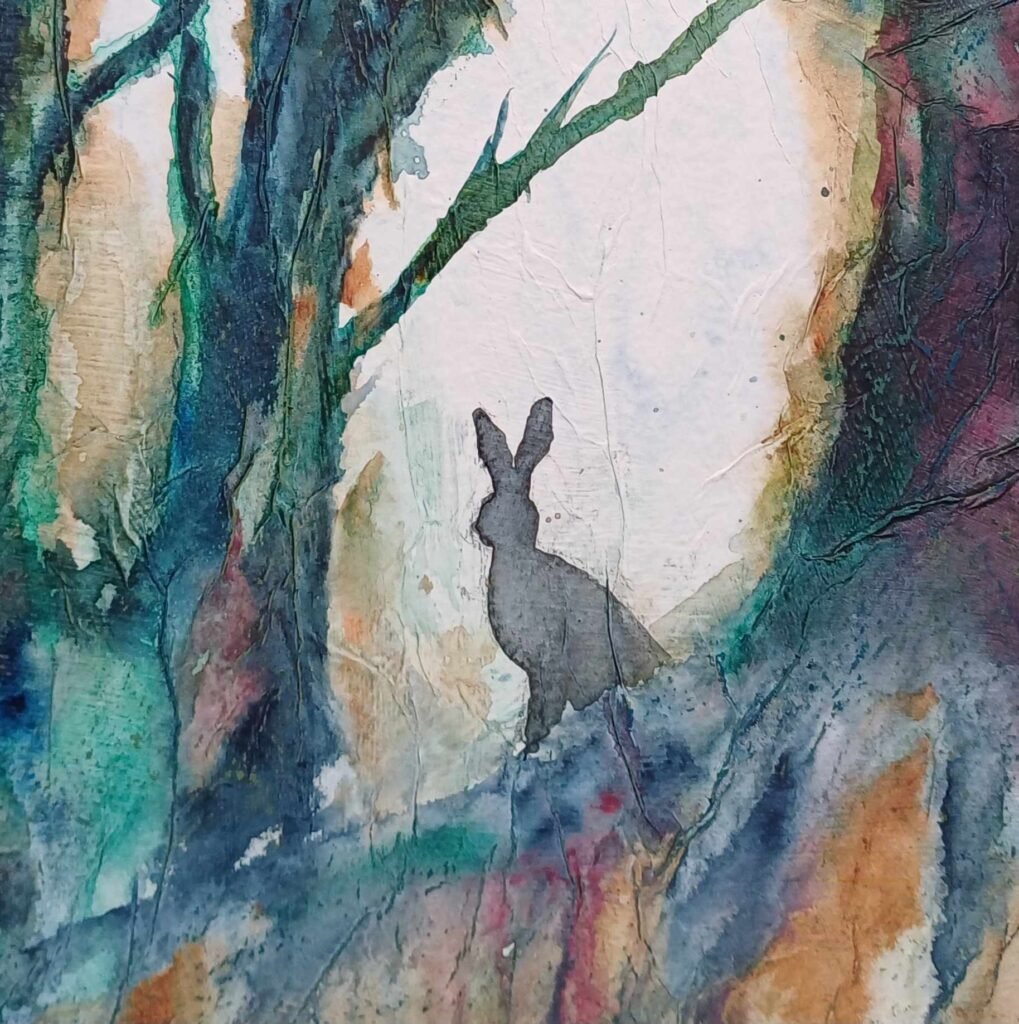
I started my journey into the rabbit hole when I started reading the book ‘The Wisdom of Birds’ by Tim Birkhead. It’s a fascinating history of ornithology, illustrated with the most exquisite drawings and illustrations of birds. Quite early in the book, the author describes the career of John Ray who worked in the 1600’s on the creation of a hugely influential encyclopedia of ornithology with his colleague and friend Francis Willughby. The author regards John Ray as one of the most highly influential people in the field of ornithology and this encyclopedia was pivotal in this. The thing that really grabbed me though, was the fact that the decision by the two men to embark on the creation of this book was made while they were visiting the Isle of Man. I wasn’t reading the book thinking there would be any link to the Island, so it was quite a surprise to find out that they were here in 1660 and after making the decision to overhaul the field of ornithology they set off around the British Isles and Europe for years of research.
I decided this was worthy of a blog post somehow and set off on my own travels around the internet to see if I could find a copy of their ornithology. After a good bit of searching, I found a scanned copy of the book on Internet Archive. The book had been published after the death of Willughby by John Ray in 1676.
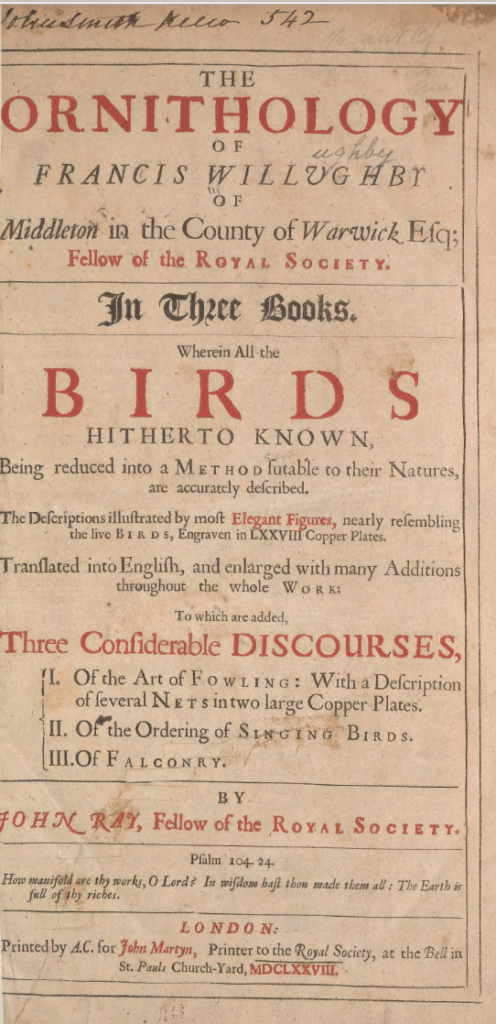
I began to scroll through the book and marvelled that I could be reading something written so long ago, in such a different age, within minutes of learning of its existence. The internet has changed so much of this world and we really don’t need patience like we used to!
As I looked through the book I came upon a section in the appendix of short descriptions of birds that Ray and Willughby had heard a little about, but not with enough detail or certainty to make it into the main part of the book. One of the descriptions caught my attention in particular, as it was entitled ‘Of Birds that cannot stand’ and the head of the bird in questions was described as being ‘changeable according as it variously reflects the Sun-beams, like the Heliotrope stone, or a Peacocks head’. I found this quite beautiful and wondered if I could locate this strangely beautiful but awkward bird.
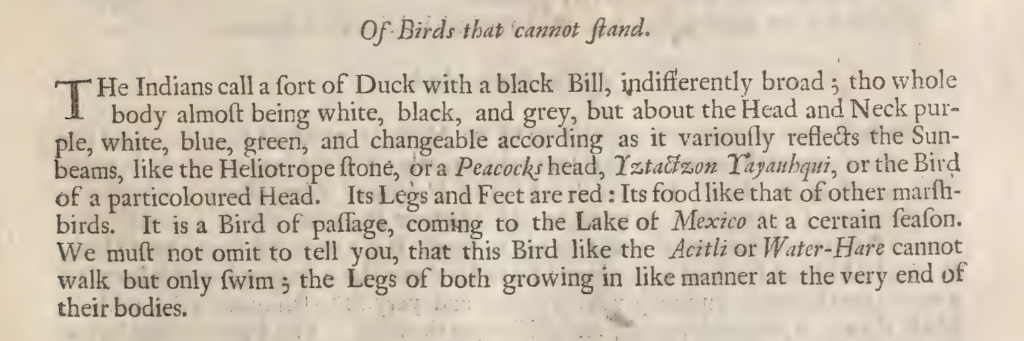
Unfortunately, although the name of the bird was given, I couldn’t decipher all of the letters within the name and those that I could indicated words from a quite unfamiliar language. I was expecting Latin, but this book was written before the classification of living things was standardised and was, in fact, inspiration for Linnaeus who came along 60 years later to do just that. This bird’s name looked something like Yztactzon Yayanhqui and was described as coming to the lake of Mexico by ‘the Indians’. I guessed that this must refer to Native Americans and the name of the bird has something of a Native American ring to it when said aloud. I therefore started thinking of all of the possible letters that each character could be and googled each until they gave me a lead. I never worked out the name completely, but when I tried Google AI told me it was from the Nahuatl language and means ‘white hair’.
The Nahuatl language is spoken in Mexico (it was the language of the Aztecs) and so this fitted very well. Also, the bird in question was described as having some white on its head along with the multicoloured iridescence. Determined to work out the rest of the name I consulted the Nahuatl online dictionary and gradually worked out that ‘yaya’ is a word meaning ‘to go’ and ‘qui’ appears to be a suffix meaning ‘one who does something’. ‘One who goes’ seems to be an odd description of a bird that can’t even stand but perhaps they were referring to its motion on the water, or more probably, that I’ve made errors in the translation.
Having realised that I wasn’t going to work out the name of the bird, I decided to try to find a bird that fitted the description. It seemed like it was pretty distinctive so surely a quick google of Mexican birds of this type would reveal some strong contenders? Right? Wrong! No matter what I fed into the search engine nothing likely was returned – no wonder Ray didn’t add this to the main text of his book!
One of the birds that did keep getting suggested was the Western Grebe and indeed, this turns out to be the ‘Acitli’ mentioned in the text as being very similar to the bird in question.
It’s worth noting that you have to be very wary of Google AI summaries. Google AI doesn’t seem to like saying it doesn’t have an answer for you and often tries to convince you there’s an error in your description or downplays something you told it was a key piece of information. I was adding to my searches that this bird couldn’t stand but could swim and had red legs. On several occasions, Google AI suggested birds that had red somewhere else on the body and told me the observer must have made a mistake or misremembered. On one instance it suggested a bird that was famous for it’s movement on land! It even gave a reference to a page that didn’t contain information relating to the subject of the reference and was therefore completely inaccurate and misleading. AI can be useful, but definitely use it with extreme caution!
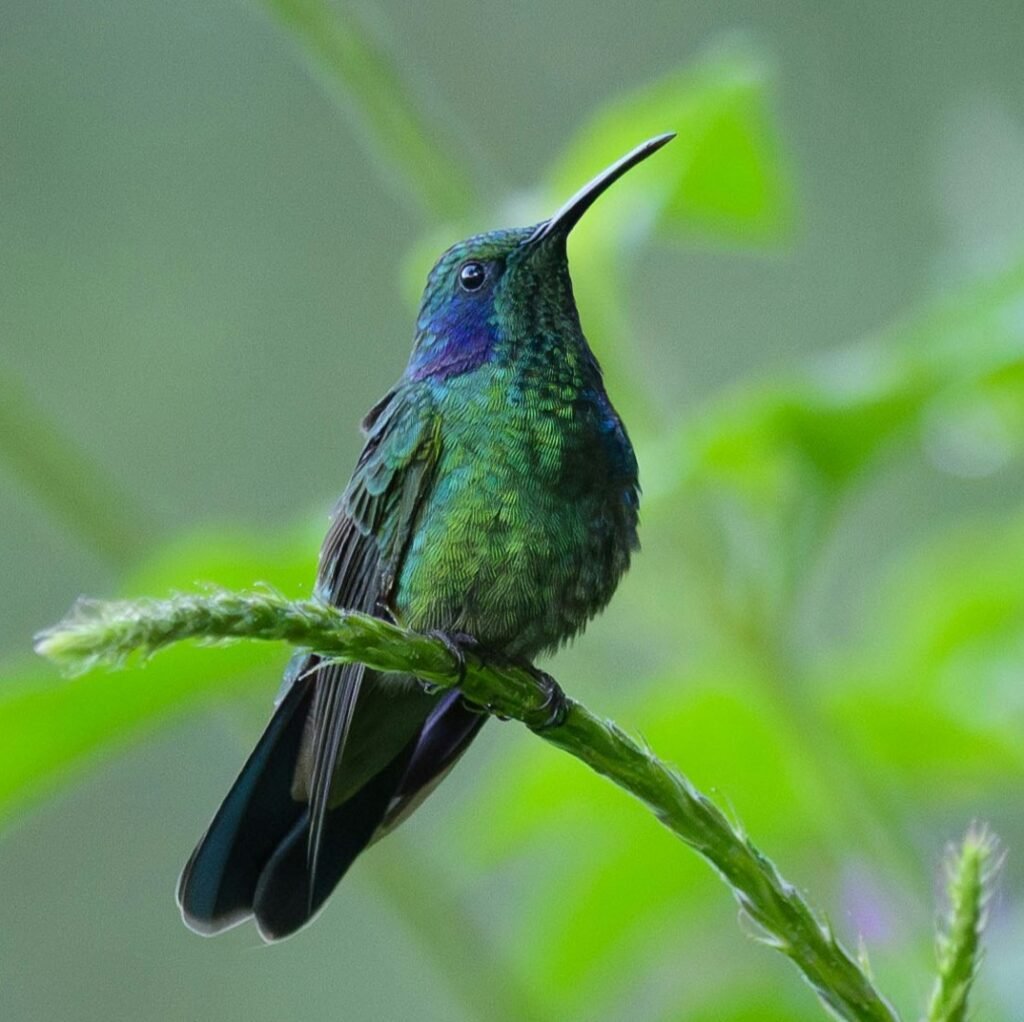
Despite the futility for the identification of the ‘bird that can’t stand’ I did read about many other interesting birds as I was searching the ‘net. One of the most beautiful birds that I discovered was the Mexican Violetear (Colibri thalassinus), a hummingbird with the most beautiful green and violet plumage. I’ll certainly be drawing this wonderful photo that I found of the bird, when I have more time.
I also discovered the Great-Tailed Grackle (Quiscalus mexicanus), which may now be my second favourite bird after the raven. This bird looks like a corvid but is actually a North American version of a blackbird. It has the eye of a blackbird, I must admit, but the rest of its plumage and looks quite crow-like to me and it has the most glorious tail!
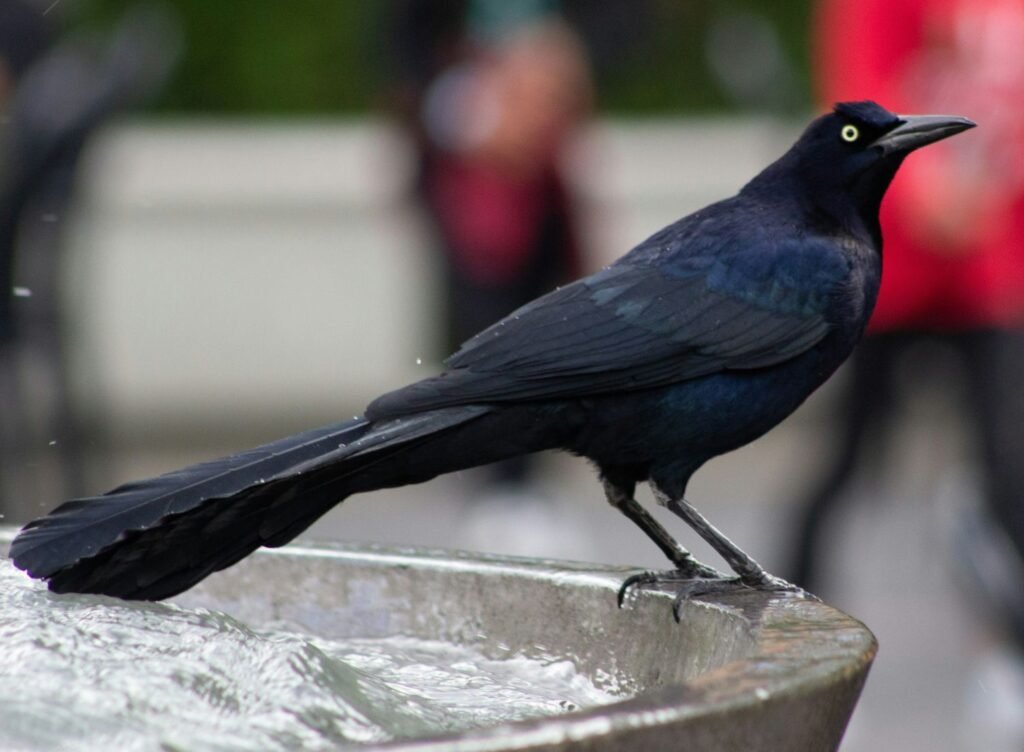
I wondered, on the off-chance, has this bird ever made it to the Isle of Man? A quick google later told me it had never been sighted here but that this bird has been very occasionally seen in other areas of the British Isles, such as a sighting in Pembrokeshire in 2023. Such travel by these, usually North American, birds may well be ship-assisted as they tend to occur near international ports.
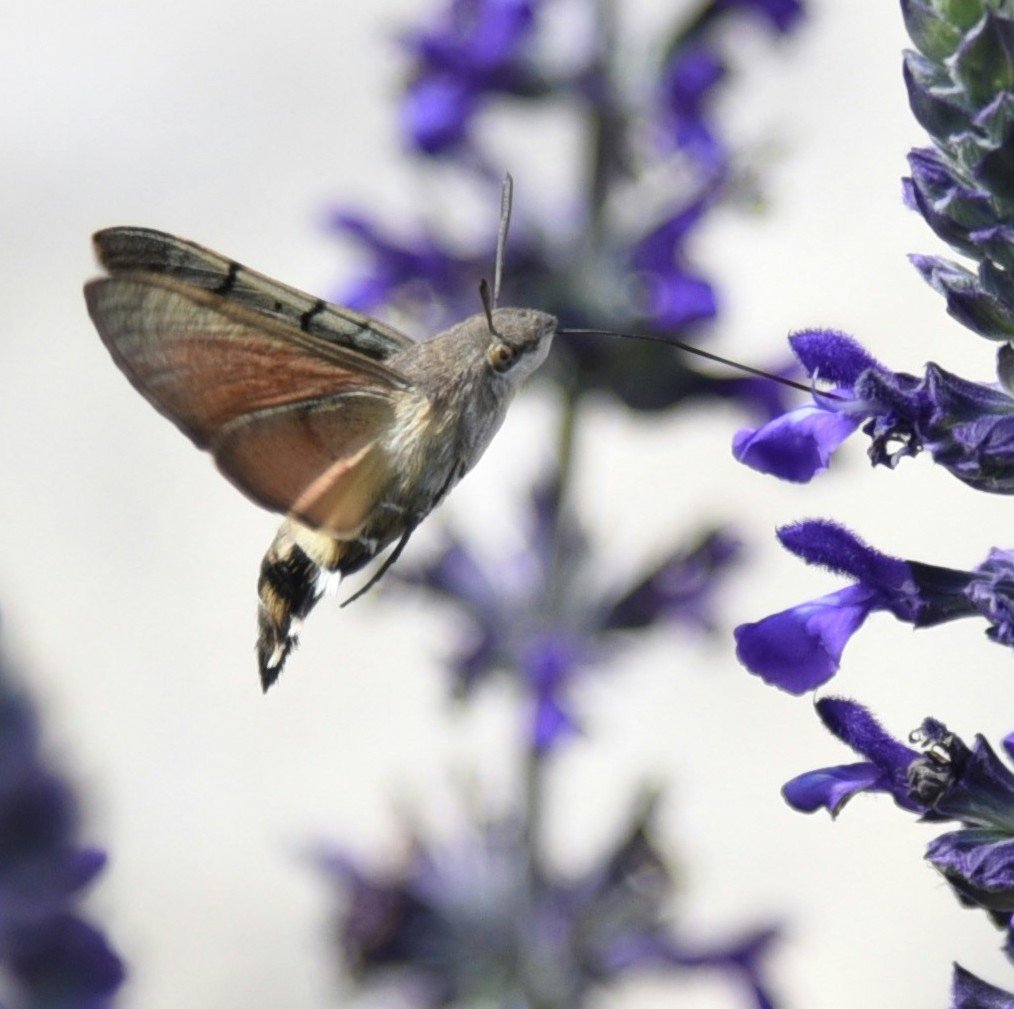
Unhappy that my long stint of internet searches hadn’t returned me to the Isle of Man, I searched to see if any hummingbirds had made it here. They hadn’t but I was pleased to find a lovely video from Mike Hassam of a Hummingbird Hawk-Moth (Macroglossum stellatarum) in Glen Maye last summer. They’re quite mesmerising to watch and are the closest thing to a hummingbird that we get in the British Isles.
It’s kind of fitting that John Ray should lead me on such a merry dance through the natural world as he was not only an ornithologist but a biologist with a huge knowledge of plants and insects too. I’ll continue to read about him in ‘The Wisdom of Birds’ and try not to fall down any more rabbit holes as I do.
Until next time,
Emma


Leave a Reply to Jan Kinrade Cancel reply