I’ve recently been gifted a beautiful hellebore by a friend (thanks Jan) and it got me thinking about whether these interesting flowers occur in the wild on the Isle of Man. I know they’re part of the buttercup family of flowers but I don’t remember ever seeing any hellebores, and they’re quite distinctive. Luckily, we have google nowadays so it wasn’t long before I had answers to my questions and I can share them with you in this week’s blog post.

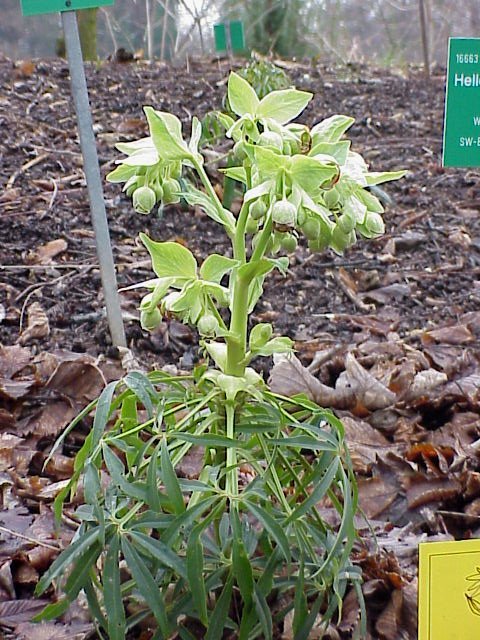
Hellebores are such a welcome sight in the winter as they flower when there is little else giving colour to our gardens and hedgerows. Of the species found in the wild in the UK, the most widespread is the unappealingly named stinking hellebore (Helleborus foetidus). Despite its name (earned from the sharp smell released when its leaves are crushed) this evergreen perennial is striking, with finely divided dark leaves and nodding, bell-shaped green flowers edged with purple. It can be found in parts of southern and western England and Wales, where it often grows on chalky soils, woodland edges, scrub and rocky slopes. I could find one record of this plant on the Isle of Man on the NBN Atlas from 1994 on Bayr ny Haara road. This was an unconfirmed identification, possibly a garden escapee, and interestingly the observation was made by Larch Garrad the former curator for natural history at the Manx Museum and author of The Naturalist in the Isle of Man which I reviewed almost two years ago.
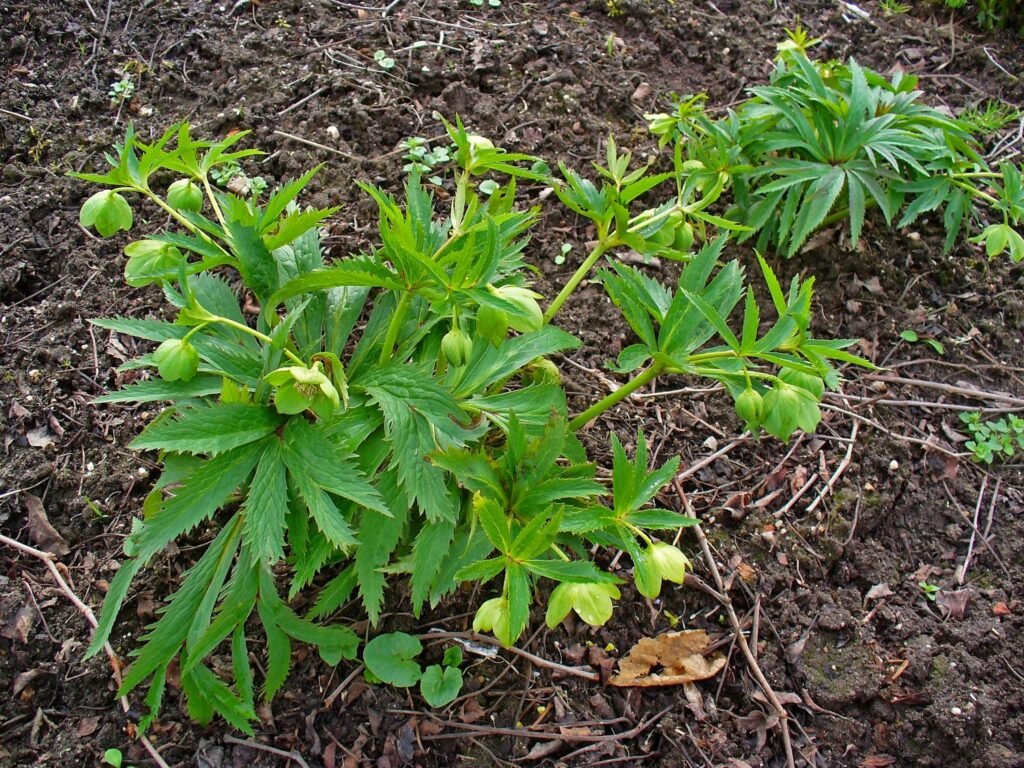
Another species encountered in the wild in the British Isles is the green hellebore (Helleborus viridis), which is far rarer and more localised. This plant favours ancient woodland and shaded hedgerows, particularly in the West Midlands and parts of southwest England. Unlike the stinking hellebore, it dies back in summer and re-emerges in late winter or early spring, producing larger, open green flowers. Its scarcity means it is a plant of conservation interest, and sightings are often associated with long-established, undisturbed habitats. As far as I can find, there have been no sightings of the green hellebore on the Isle of Man.
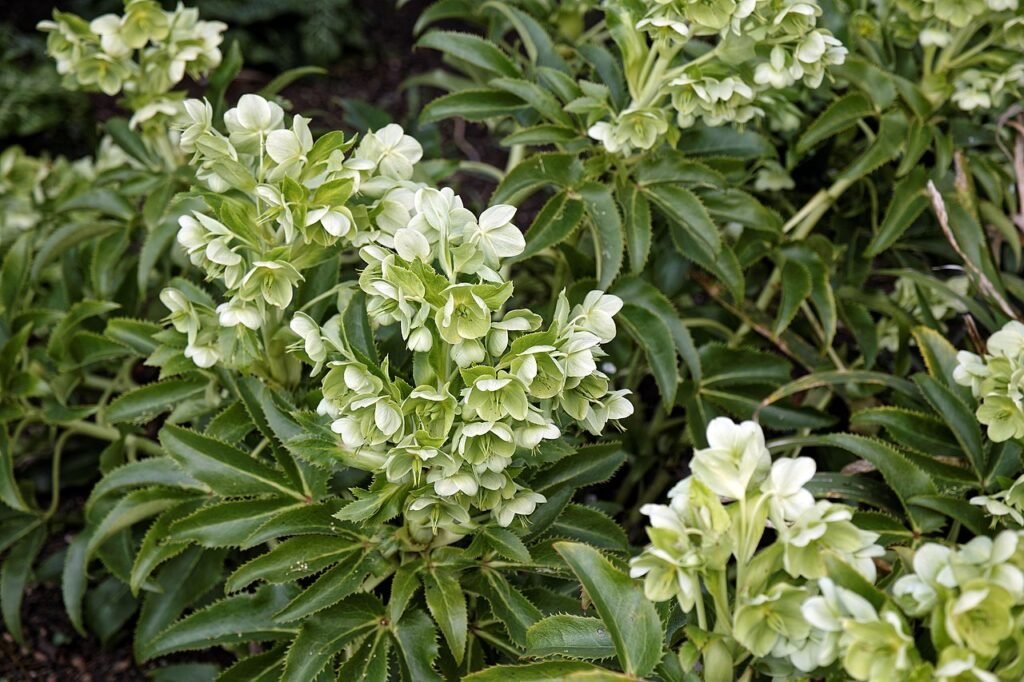
A third species of hellebore that I’ve found evidence of local sighting for is the Corsican hellebore (Helleborus argutifolius). There are several recordings of identification of this plant on the Isle of Man on the NBN Atlas and, again, Larch Garrad has made at least one of the identifications.
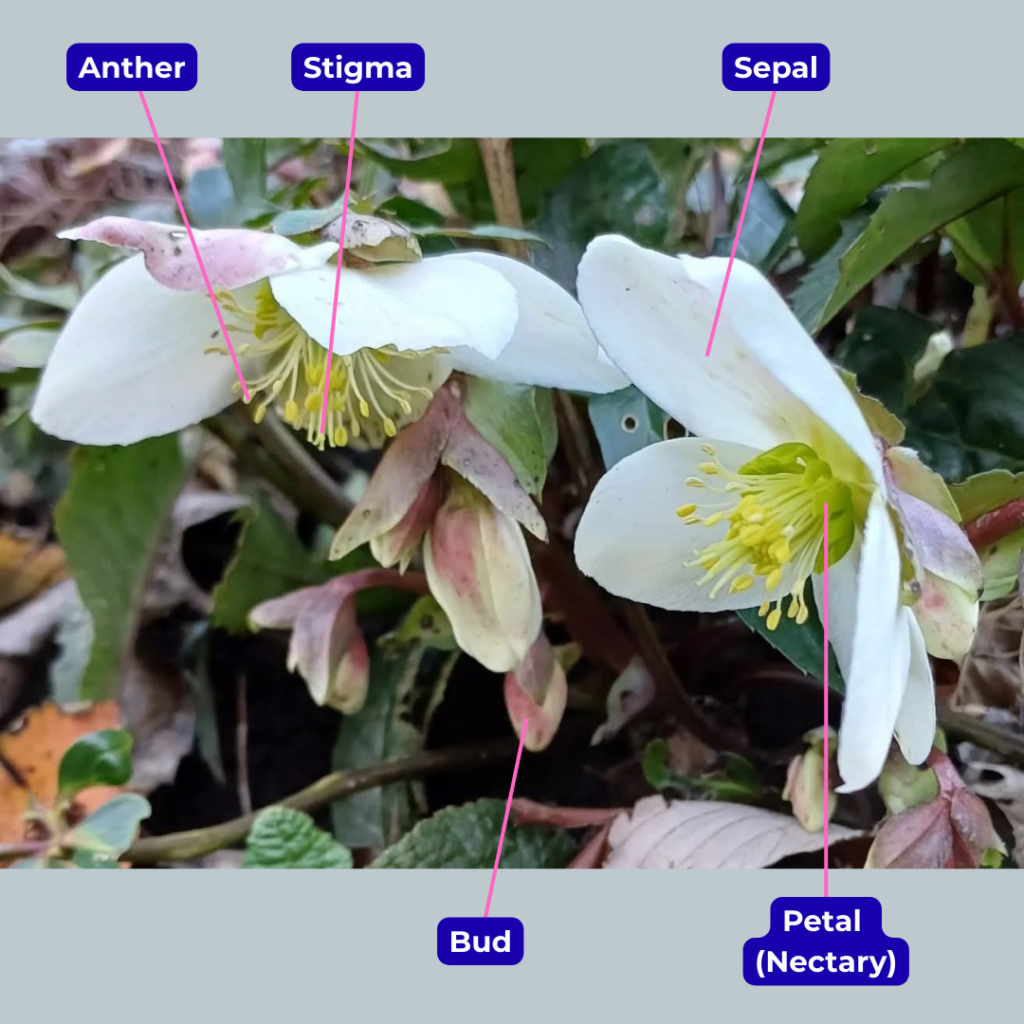
Hellebore flowers have an unusual and interesting structure. What look like petals are in fact sepals, which are thick and leathery, helping the flower endure cold and wet winter conditions. The true petals are reduced to small, tubular nectaries tucked inside the flower, which produce nectar for pollinating insects. At the centre sits a prominent cluster of stamens surrounding several carpels that later develop into seed pods. In the photo below, the anthers can be seen at the ends of the stamen and the stigma at the top of the carpels.
While this basic plan is shared across hellebore species, there are differences. For instance, the stinking hellebore has many small, nodding flowers held in large clusters with narrow, bell-shaped sepals, whereas the green hellebore bears larger, more open flowers with broader sepals that face outward. These structural variations reflect differences in habitat, pollination strategy and overall growth habit between species.
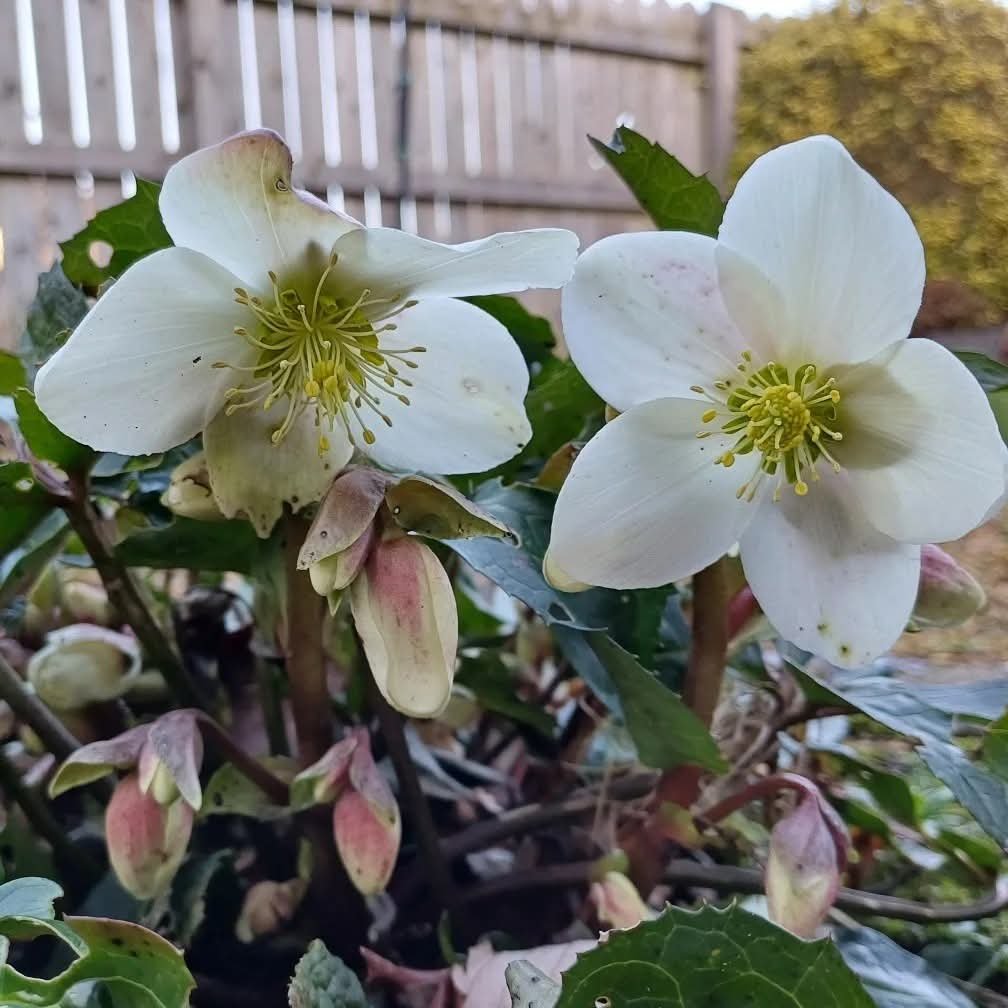
I have had a hellebore in my own garden for years and it gives me great joy each winter when it blooms. Apart from the cyclamen, nothing much else is flowering when these beautiful flowers unfurl so I was delighted to receive a companion for this plant and look forward to both giving me joy next year.
Looking at the photos in this post, I remember how much I love drawing flowers in graphite pencil. I think I’m going to spend at least some of the weekend drawing hellebores, so don’t be surprised if I’m bombarding you with drawings of these plants on social media for a few days!
Until next time,
Emma

Leave a Reply