The only plant named after the Isle of Man, the Isle of Man cabbage (Coincya monensis ssp. monensis) is a member of the brassica family with 4-petalled yellow flowers and rocket-like leaves. Once abundant, this coastal species has now dwindled to being critically rare on the Isle of Man and is now red-listed under the Plants of Conservation Concern in the Isle of Man 2022. It’s endemic to the British Isles, meaning it only lives in Great Britain, and nowhere else in the world. The future of this plant looks uncertain, especially considering the increasing pressures on its habitats, but with a little love and care, we may be able to help this plant remain on the island that gave it its name.
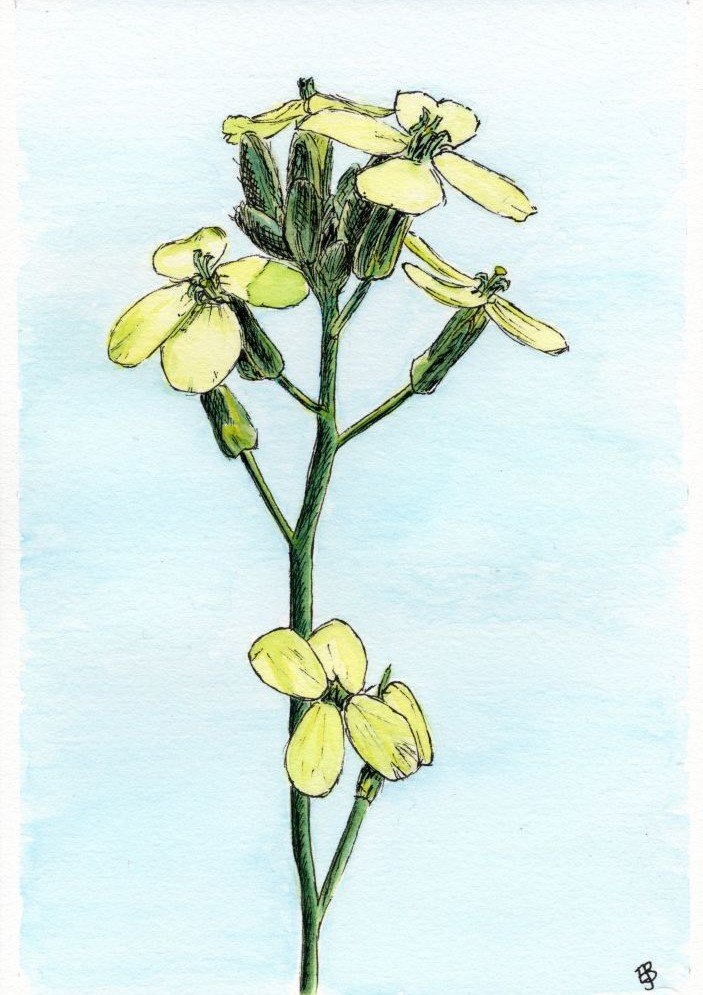
The Isle of Man cabbage (Coincya monensis subsp. monensis) is a coastal brassica historically associated with the sand dune systems of the Isle of Man. It was first described scientifically in the nineteenth century and recognised as a distinct Manx subspecies due to its geographic isolation and physical traits.
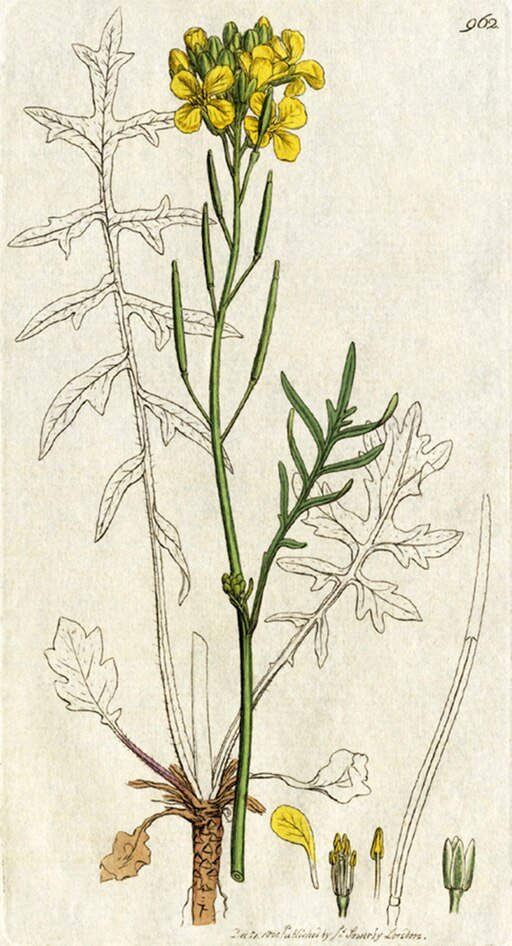
It’s a low-growing, short-lived perennial in the cabbage family, distinguished by its bright sulphur-yellow, four-petalled flowers that are arranged in loose clusters above its grey-green foliage. The leaves form a basal rosette and are often lobed or toothed, with a slightly fleshy texture that helps the plant tolerate the salt spray and drought typical of the coastal dune environment. As the season progresses, it produces long, slender seed pods (siliques) that stand erect or slightly spread from the stem. The plant typically grows in open, sandy ground and rarely exceeds 30–60 cm in height.
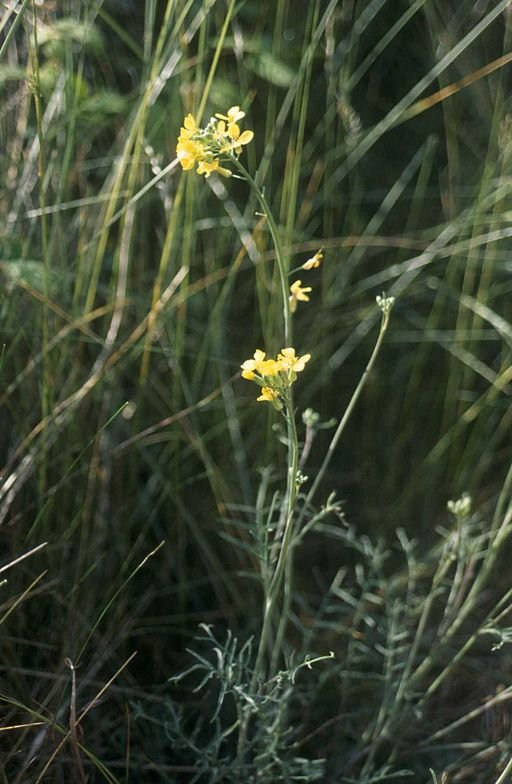
Like many dune specialists, it’s adapted to disturbance and thrives in open, sandy ground where competition from taller vegetation is limited. Its elongated seed pods disperse seed into newly exposed sand, allowing the plant to colonise freshly disturbed patches – an ecological strategy well suited to dynamic dune systems.
Loss of dune habitat due to development of areas such as Douglas Bay in the 19th and 20th centuries, and ongoing threats from storms and rabbits have caused numbers of Isle of Man Cabbage plants to decline to the point that they are now critically rare on the Isle of Man. This plant is now red-listed under the Plants of Conservation Concern in the Isle of Man 2022 and it has a Biodiversity Action Plan.
Efforts to bring this plant back from the brink of extinction on the Island have included the planting out of clumps of plants in the Ayres and the erection of rabbit-proof fencing to protect them as they grow. Unfortunately, such measures have only had limited success, according to the Biodiversity Action Plan log, and increases in storm damage due to the effects of global warming may spell the end of the existence of this plant on the Isle of Man.
Some Isle of Man Cabbage plants have been found on the Jurby coastline and in the Ramsey Mooragh Shore area, so perhaps they will find a way to survive. Indeed, in a paper (Smith, 2012) on the translocation of this plant prior to the excavation of sand from the Crosby area of Merseyside, the moved plants did not survive well, whereas the remains of the original colony appeared to cope better than expected with the disruption to their environment. There are, in fact, many colonies on the coastline of the UK, just adjacent to the Isle of Man in the North-West of England with evidence suggesting the seeds of this plant can be dispersed in sea water (Rich, 1999). A distribution map for the Isle of Man Cabbage can be found on the Botanical Society of Britain and Europe website and Plant Atlas.
The story of this plant has left me rooting for it (apologies for the plant-based pun) and reminds me that even plants of most unassuming appearance should be cherished and looked after. With modern identification apps and online recording of sightings it’s easier than ever to work out what’s around us in the natural world and to contribute to its recording and conservation. Biodiversity enhances ecosystem resilience and functions that support all humans, so we have a vested interest in keeping plants such as the Isle of Man Cabbage flourishing in our environment. It’s also the only plant to be named twice after the Isle of Man (its latin name monensis stems from Mona), which is another reason to keep it alive on the island that gave it its name.
Have a good fortnight,
Emma
References:


Leave a Reply