
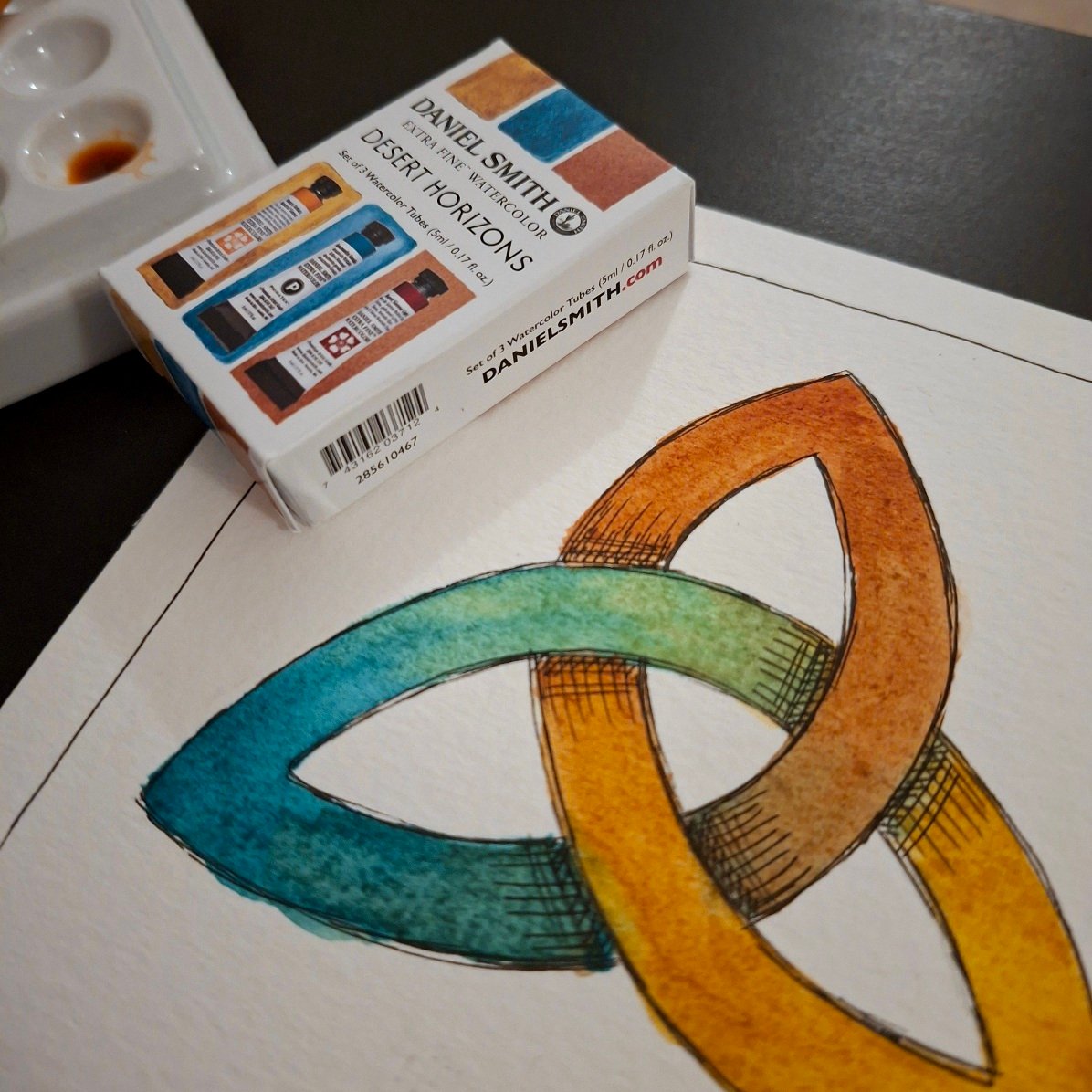
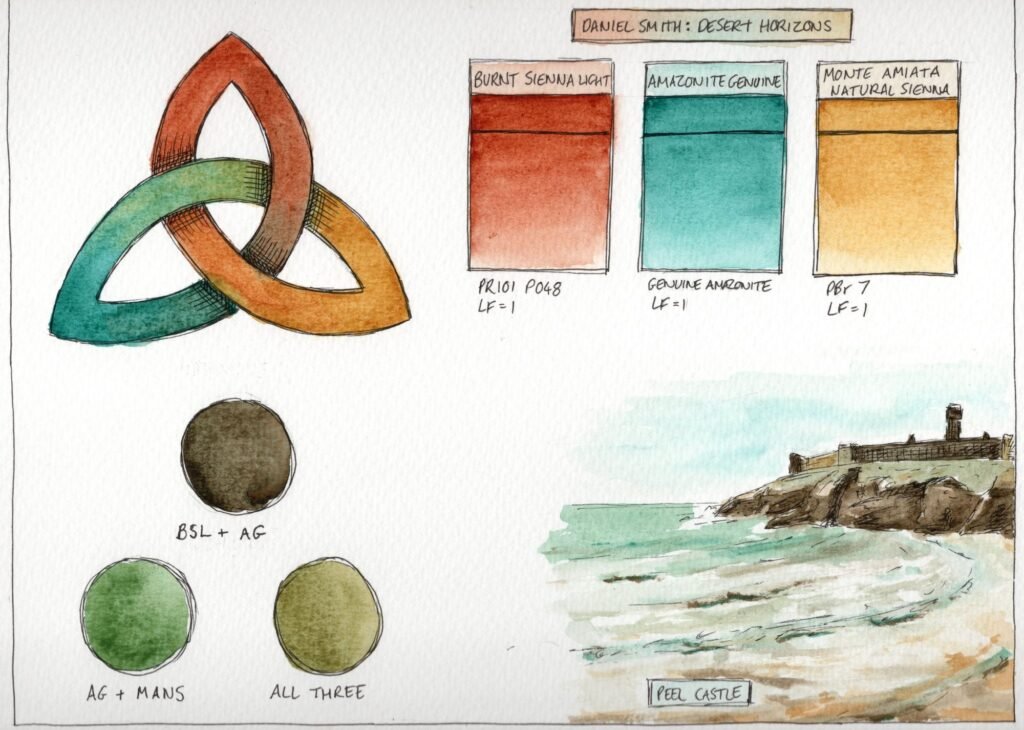
Daniel Smith released several triad watercolour sets during the summer and I thought I’d take advantage of the November discounts to try some out. Although tempted by many, I settled on the ‘Stormbreaker’ and ‘Desert Horizons’ sets as they contained useful or interesting colours that I don’t already own. I started by testing out the Desert Horizons set as I just couldn’t resist the beautiful colour of Amazonite Genuine (made with genuine amazonite as the name suggests) and was really interested in how this mixes with the earthy Monte Amiata Natural Sienna and Burnt Sienna Light. I’ll be building a new palette soon and some of these may well be contenders!
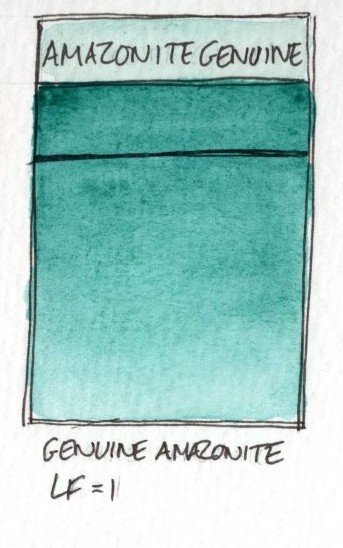
I love a turquoise and have been interested in trying out Daniel Smith’s Amazonite Genuine for a while. While some of the Daniel Smith Primatek (genuine mineral) range can be very weak in tinting strength, many of the colours in this line have a higher power and are regulars in the palettes of artists around the world. Amazonite Genuine is a beautiful blue-green that is reminiscent of a soft phthalo. Unlike a phthalo, this colour is non-staining and although it’s meant to be non-granulating, it did appear to give me a little texture on the rough Bockingford paper that I tried these paints out on.
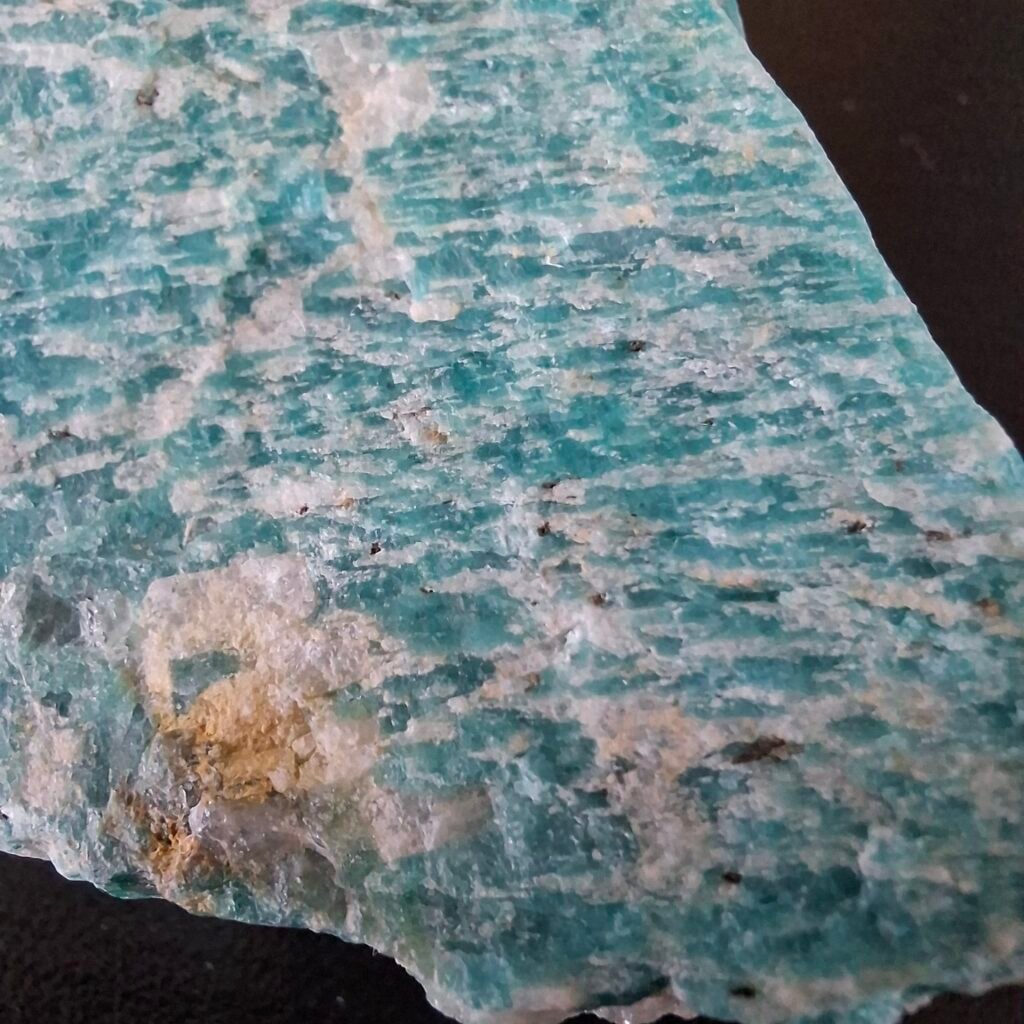
I have a lump of Amazonite mineral at home and it’s a very close colour to the paint. I guess I shouldn’t be surprised as the it contains genuine amazonite. Amazonite was given its name as people incorrectly believed it was found along the Amazon River. It is mined in other parts of Brazil though and Daniel Smith have apparently acquired a unique supply from the region.
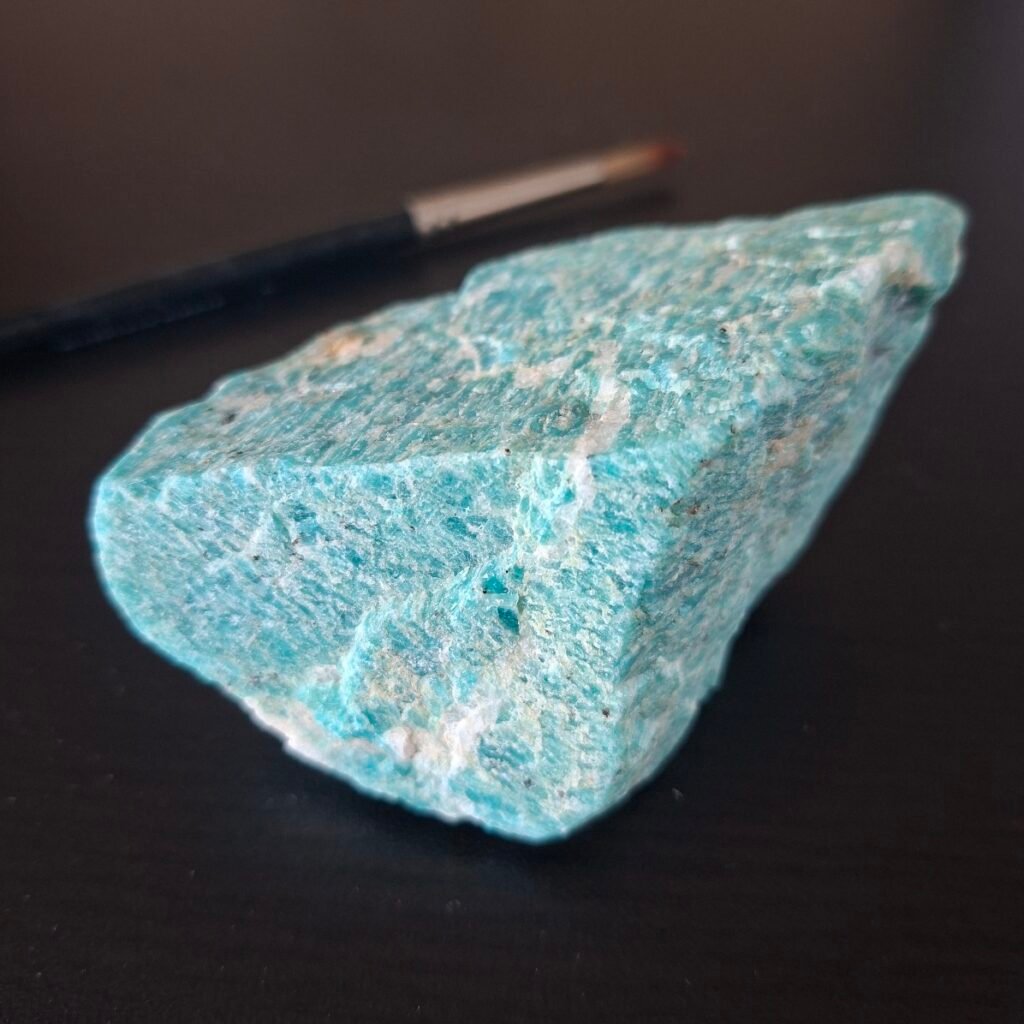
Amazonite has distinct white stripes across it’s surface that run in two directions, reflecting the fracture planes of its crystalline structure. Amazonite is form of feldspar, which is a group of aluminosilicate minerals that are the most abundant mineral in the Earth’s crust – making up around 60% of it. Amazonite isn’t particularly abundant however, but is found in a number of locations around the world. Its distinct blue-green colour is thought to come from the inclusion of lead and water within the structure of the crystal. More on the structure of amazonite and related minerals can be viewed on the Spiritual Gemmologist website.
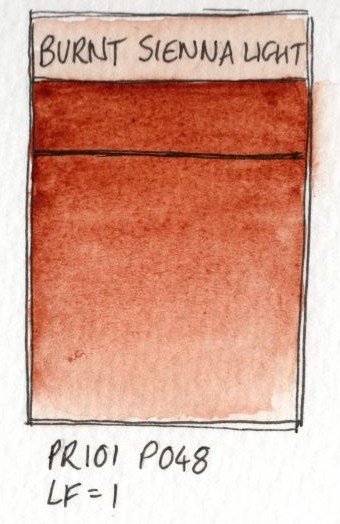
One of the most common colours to find on a watercolourist’s palette is probably burnt sienna, a red earth colour that has lots of mixing uses. Burnt sienna tends to be made of the pigment PBr7 (a natural pigment) or PR101 ( synthetic) and I’ve been using the Winsor and Newton (PR101) version for years. The Desert Horizons Triad set contains Burnt Sienna Light, made of the pigments PR101 and PO48 (Quinacridone Burnt Orange). It’s transparent and although it says non-granulating on Daniel Smith’s website I could see a little granulation on the paper I used. It’s a more orange burnt sienna than the Winsor and Newton one I’m used to and a thicker consistency with a higher pigment load.
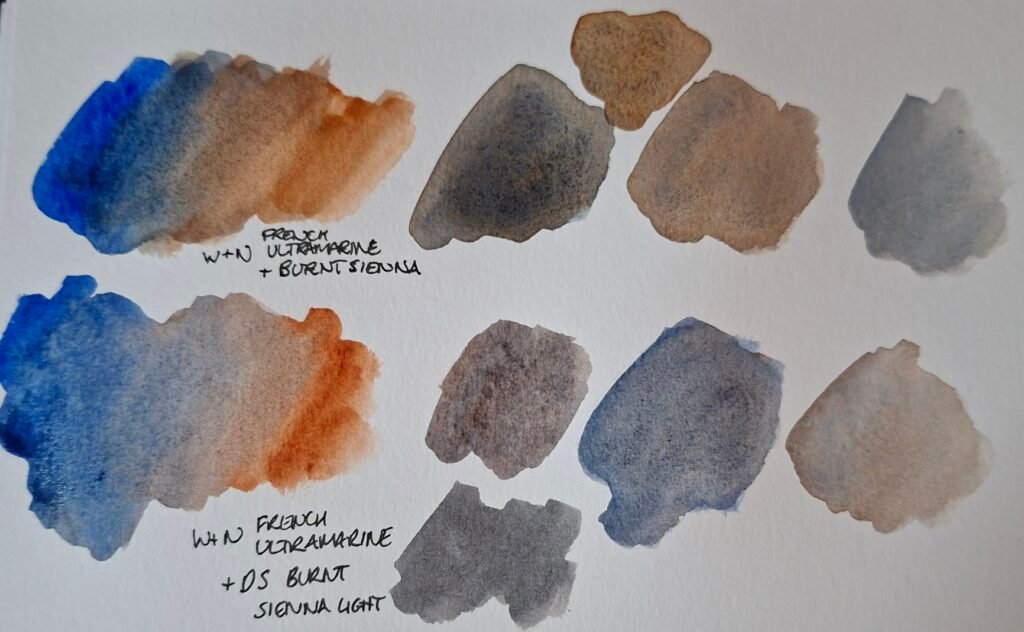
I was curious as to how the mixes with French ultramarine would compare as it’s such a common mix. Although the image below isn’t scanned and is straight from my phone, it shows that both forms of burnt sienna make a good range of neutrals when mixed with the blue. I really liked the slightly violet undertones in the neutrals made with the Burnt Sienna Light but the more yellowish browns that I made with the Winsor and Newton Burnt Sienna would probably be more useful for painting rocks and architecture. I really like the strength of the Daniel Smith paint though and I think I’ll be adding Burnt Sienna Light into my next mixing palette.
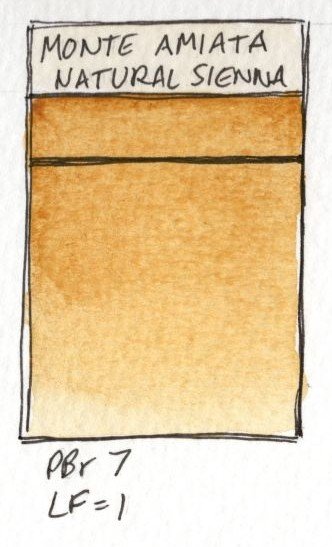
The final colour in the Desert Horizons Triad set is the snappily named Monte Amiata Natural Sienna. The pigment here is PBr7 and it has a colour similar to raw sienna with a golden glow that wasn’t quite picked up by the images. It’s a low-staining and slightly granulating colour that’s transparent and lightfast. I’ll be trying it as a mixing colour in my palette in place of raw sienna.
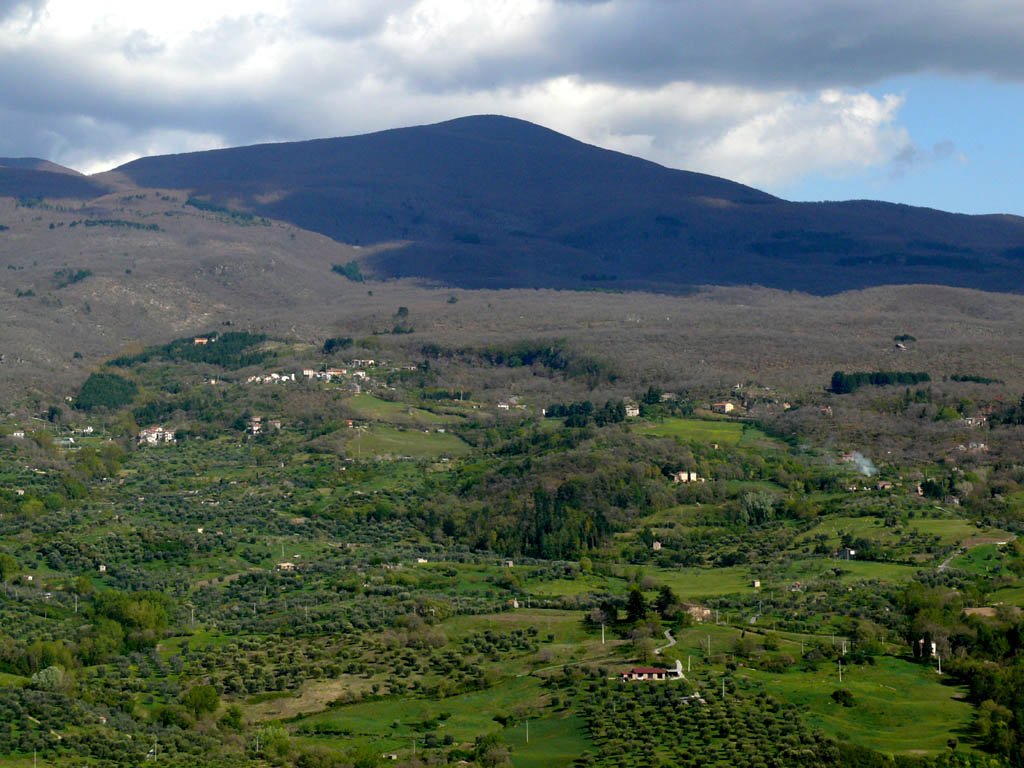
Monte Amiata is an ancient volcano in the Siena province of Tuscany, Italy and is the largest of the lava domes in that area. Siena has given its name to the sienna pigments, which were originally sourced from the Tuscany region. Many of the original deposits in Tuscany have been exhausted over the years, but pigments are still sourced by paint companies from the slopes of Monte Amiata. I love that a colour so useful for painting landscapes has come from the landscape. I need to go to Tuscany and paint with it!
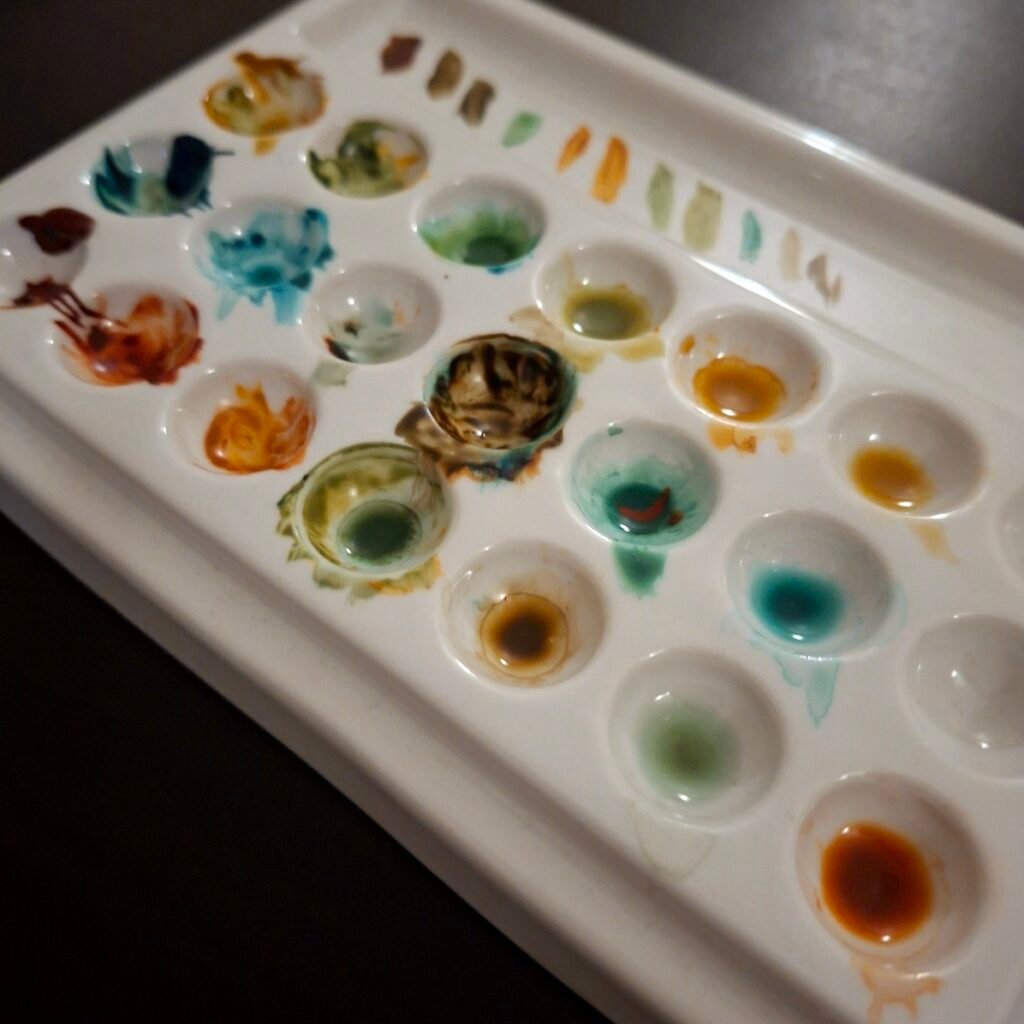
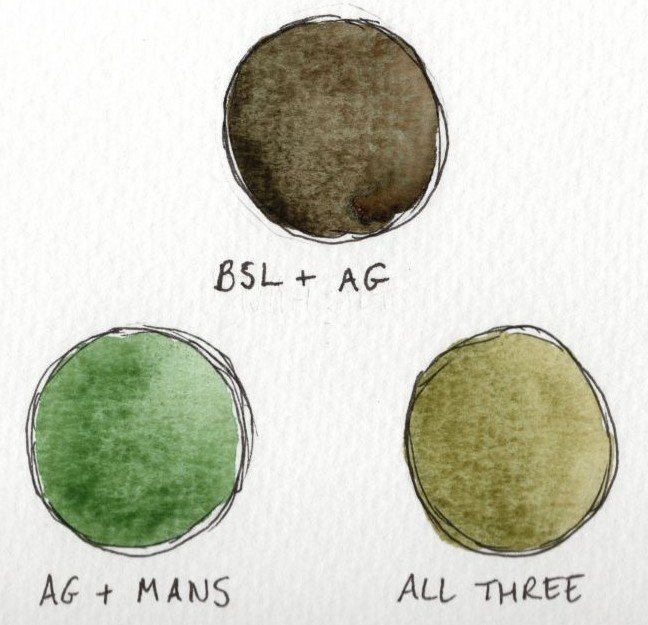
I really enjoyed making mixes of these paints and found they made some lovely natural greens and browns. All three are strong contenders for my mixing palette.
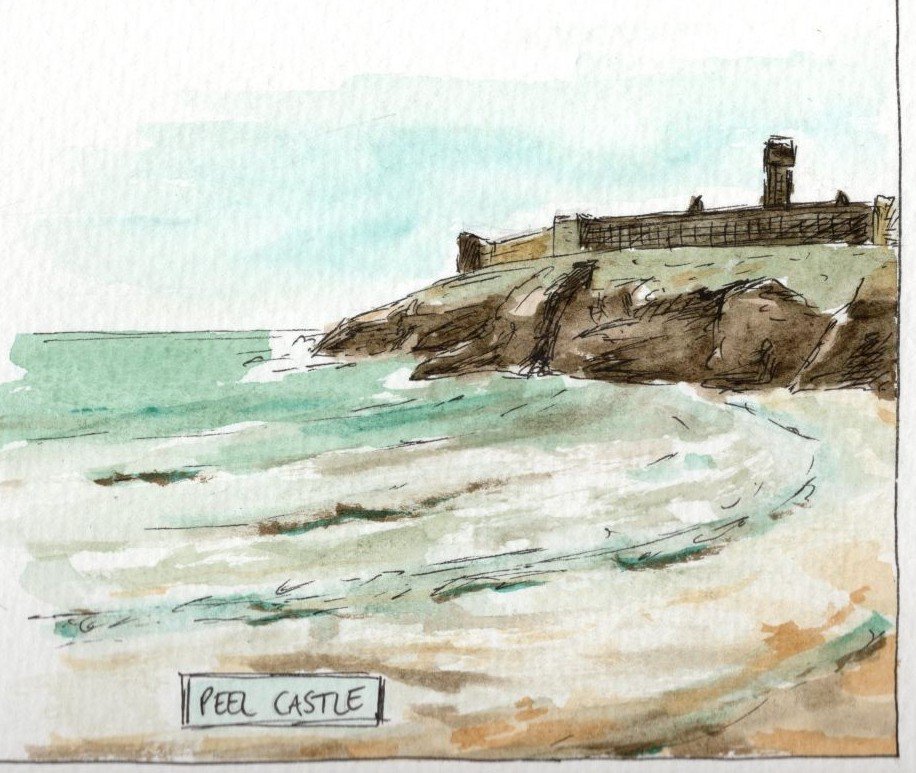
I thought I’d try a very quick sketch of Peel Castle using just these three colours. I was surprised to find that Amazonite Genuine made a decent sky colour in this sketch and it was easy to mix the dirty teal colour of the sea. I missed having a warmer blue but I was happy at the range of colours I could achieve with this set.
I’m so happy with this gorgoeus set of colours and can’t wait to try them out with some of my other paints. Each one is very likely to make it into my next mixing palette and each have a point of interest that makes me keen to see how they perform in more complex paintings. I love the idea of having Amazonite Genuine as a non-staining blue-green to use for mixes and the orange pigment within Burnt Sienna Light produces some interesting results and a different feel to the neutrals it creates. The wonderful yellow glow of Monte Amiata Natural Sienna, while still definitely being an earthy colour, just makes me want to use it, which is unusual for me as I’m not typically very interested in the yellower earth tones (although I always have one on my palette for mixes). I’m looking forward to trying out the ‘Stormbreaker’ set soon and seeing how I get on with the Prussian Blue, Bloodstone Genuine and Iridescent Electric Blue – watercolours are such fun!
Have a great fortnight and I may see you at the Christmas Hygge at Peel over the weekend. I don’t have a stall but I’ll be shopping!
Emma
Leave a Reply